Wednesday, June 03, 2009


Sunday, May 31, 2009
Friday, May 29, 2009
Lock the gates, Goofy; take my hand
(Skip the first 2 minutes or so when David Sanborn is trying to interview him; He lloks almost as uncomfortable as this guy.)
Thursday, May 28, 2009
Lie to me, tell me they're only robins.
Okay, so you've decided to post a video to accompany a great but fairly obscure country song from 1969 (Highest position: No. 19) - What images come to mind?
Why, a slide show of auto-dealers! What else?
(But what a great song!)
Why, a slide show of auto-dealers! What else?
(But what a great song!)
Wednesday, May 27, 2009
Tuesday, May 26, 2009
Friday, May 22, 2009
Sunday, May 17, 2009
Thursday, May 14, 2009
New rules
1. Never beg another man.
2. Never Trust anyone
3. Never get between a gun and its target.
4. Punches are like bullets. If you don't make the first one count,you just might be finished.
5. If you wound a man, you better kill him or sooner or later he's going to kill you.
6. The right bullet at the right time, well aimed.
7. If you untie a man, take his gun before that.
8. Don't give a man any more bullets than what he's got use for.
9. When you start killing, you can't stop it.
2. Never Trust anyone
3. Never get between a gun and its target.
4. Punches are like bullets. If you don't make the first one count,you just might be finished.
5. If you wound a man, you better kill him or sooner or later he's going to kill you.
6. The right bullet at the right time, well aimed.
7. If you untie a man, take his gun before that.
8. Don't give a man any more bullets than what he's got use for.
9. When you start killing, you can't stop it.
Wednesday, May 06, 2009
Sunday, May 03, 2009
Nobody?
A trailer for a relatively obscure Terence Hill western, "A Genius, Two Companions and a Dupe", also known as "A Genius" and "Nobody is the Greatest", directed by Damiano Damiani.
Tuesday, April 28, 2009
Wednesday, April 08, 2009
Thursday, March 12, 2009
Saturday, March 07, 2009
Sunday, February 08, 2009
Tuesday, January 20, 2009
Friday, January 16, 2009
Monday, December 15, 2008
More seasonal greetings
This, the earlier Kinks and Roy Wood songs, are the only Christmas music you'll ever need.
Thursday, December 11, 2008
Motivational video of the year
From the folks as Overthinking it.
Here's the full text - because you'll probably want this in a needlepoint sampler:
"Shame on you. This could be the greatest night of our lives, but you’re going to let it be the worst. And I guarantee a week won’t go by in your life you won’t regret walking out, letting them get the best of you. Well, I’m not going home. We’ve come too far! And I’m going to stay right here and fight for this lost cause. A day may come when the courage of men fails… but it is not THIS day. The line must be drawn HERE. This far, no further! I’m not saying it’s going to be easy. You’re going to work harder than you ever worked before. But that’s fine, we’ll just get tougher with it! If a person grits his teeth and shows real determination, failure is not an option. That’s how winning is done! Believe me when I say we can break this army here, and win just one for the Gipper. But I say to you what every warrior has known since the beginning of time: you’ve got to get mad. I mean plum mad dog mean. If you would be free men, then you must fight to fulfill that promise! Let us cut out their living guts one inch at a time, and they will know what we can do! Let no man forget how menacing we are. We are lions! You’re like a big bear, man! This is YOUR time! Seize the day, never surrender, victory or death… that’s the Chicago Way! Who’s with me? Clap! Clap! Don’t let Tink die! Clap! Alright! Let’s fly! And gentlemen in England now abed shall know my name is the Lord when I tell our enemies that they may take our lives, but they’ll never take our Independence Day!"
Wednesday, December 10, 2008
Tuesday, December 09, 2008
Sunday, December 07, 2008
Saturday, December 06, 2008
Brian Wilson rides the Black Cab
The Black Cab Sessions is a series of short videos in which musicians are asked to perform while riding in the back seat of a cab. Simple enough, right?
Sunday, September 28, 2008
Monday, June 09, 2008
Monday, May 05, 2008
Saturday, May 03, 2008
Sunday, April 27, 2008
Saturday, April 12, 2008
Wednesday, April 09, 2008
Straight Shooting
From Harvard's 02138, a no-nonsense talk with the great Tommy Lee Jones. (Thanks to Jeffrey Wells' always relevant Hollywood Elsewhere for bringing this to my attention.)
Recommended viewing:
Recommended viewing:
Saturday, April 05, 2008
Monday, March 31, 2008
He's got the silver..
I admit it; I'm pretty excited about "Shine a Light" one reason being the trailer, which cracks me up every time I watch it:
Turns out Marty's also on the accursed MySpace, if you're interested. Go ahead, be his friend.
(P.S. 5/4/08: I had to disable the Flash version. But, go see the movie. It's amazing...)
Turns out Marty's also on the accursed MySpace, if you're interested. Go ahead, be his friend.
(P.S. 5/4/08: I had to disable the Flash version. But, go see the movie. It's amazing...)
Saturday, March 29, 2008
This day in history...
1973: Dr. Hook actually made the cover.
"Aw man, that's beautiful!"
(I saw Dr. Hook perform shortly before this song broke, in between their 1st and 2nd albums, as part of a show that also included ShaNaNa and Flo and Eddie. This video catches some of the rowdy nature of their performance, which included a completely disrespectful trashing of their earlier hit, the weepy "Sylvia's Mother." It was the biggest single of 1971, only to suffer a huge backlash when the entire world collectively decided that the song got on its nerves.
"Aw man, that's beautiful!"
(I saw Dr. Hook perform shortly before this song broke, in between their 1st and 2nd albums, as part of a show that also included ShaNaNa and Flo and Eddie. This video catches some of the rowdy nature of their performance, which included a completely disrespectful trashing of their earlier hit, the weepy "Sylvia's Mother." It was the biggest single of 1971, only to suffer a huge backlash when the entire world collectively decided that the song got on its nerves.
Monday, March 17, 2008
Same as it ever was?
Sunday, March 16, 2008
Sunday, March 02, 2008
His week still beats your year.
Happy birthday to Lou Reed, still cooler than the rest of us...
More here and here and especially here.
More here and here and especially here.
Sunday, February 24, 2008
My predictions (if "prediction" and "guess" mean the same thing):
Best Picture:
No Country For Old Men
Best Director:
The Coens
Best Actor
Daniel Day Lewis
Best Actress
Julie Christie
Best Supporting Actor
Bardem
Supporting Actress:
Cate Blanchett
Foreign Film
The Counterfeiters
Animated Feature
Ratatouille
Art Direction
There Will Be Blood
Cinematography
There Will Be Blood
Costume Design
Atonement
Documentary Feature
Sicko
Documentary Short
Freeheld
Editing
The Bourne Ultimatum
Makeup
La Vie en Rose
Original Score
Michael Clayton
Song
Falling Slowly
Animated Short
Madame Tutli-Putli
Live Action Short
At Night
Sound Editing
The Bourne Ultimatum
Sound Mixing
The Bourne Ultimatum
Visual Effects
Transformers
Screenplay –Adapted
No Country for Old Men
Screenplay –Original
Juno
Second gussing: The ones I am most doubtful about are the two actresses, original screenplay, original score and costume design...
No Country For Old Men
Best Director:
The Coens
Best Actor
Daniel Day Lewis
Best Actress
Julie Christie
Best Supporting Actor
Bardem
Supporting Actress:
Cate Blanchett
Foreign Film
The Counterfeiters
Animated Feature
Ratatouille
Art Direction
There Will Be Blood
Cinematography
There Will Be Blood
Costume Design
Atonement
Documentary Feature
Sicko
Documentary Short
Freeheld
Editing
The Bourne Ultimatum
Makeup
La Vie en Rose
Original Score
Michael Clayton
Song
Falling Slowly
Animated Short
Madame Tutli-Putli
Live Action Short
At Night
Sound Editing
The Bourne Ultimatum
Sound Mixing
The Bourne Ultimatum
Visual Effects
Transformers
Screenplay –Adapted
No Country for Old Men
Screenplay –Original
Juno
Second gussing: The ones I am most doubtful about are the two actresses, original screenplay, original score and costume design...
Friday, February 22, 2008
Friday, February 01, 2008

Sunday, January 20, 2008
"What number is it, Chip?" ... "7A"
Folksinger John Stewart, formerly of the Kingston Trio, is dead. He's best known for this very fine song:
You can find Stewart's own version here.
You can find Stewart's own version here.
Saturday, January 19, 2008
Beware of "perilous stunts" and "fancy alcoholic drinks".

Today I became Jack Valenti's Worst Nightmare. I took a group of pre-teenagers to an R-rated movie (Sweeney Todd, which is, by the way, just as good the second time around).
Meanwhile, for those of you who think the MPAA isn't tough enough, The Guardian offers this helpful selection of highlights from various " parental guidance" websites..

Sunday, January 13, 2008
"When there's no more room in Hell..."

The esteemed Robin Wood, whose writings on horror films in the 1970s remain the definitive critical work on that genre, has written a brief but typically incisive look at Diary of the Dead, the fifth installment in George Romero's trilogy-that-grew for the latest issue of Film Comment. I haven't seen the film, which was generally well received on the festival circuit last year, so I'll let Wood's analysis speak for itself.
The film is due to open in the U.S. on February 15th.
Friday, January 11, 2008
Outwitting the Curse of GMRX
A very good common-sense piece by A. O. Scott in the NYT about why people need to learn how to ignore the ratings.
Friday, January 04, 2008
The sun never sets: George Macdonald Fraser (1926-2008)

George Macdonald Fraser, whose twelve volumes of "The Flashman Papers" are among the most entertaining works of fiction of the last forty years, has died. In addition to creating (or rather, reshaping from a minor literary role in the Victorian classic "Tom Brown's Schooldays") the rascally Harry Flashman, Fraser wrote the screenplays for Richard Lester's "Three Musketeers" films.
Information on Fraser's life can be found here, plus a sample of his work here.
Wednesday, January 02, 2008
A cautionary tale...
Did you ever notice how the cautionary mental hygiene films and the exploitation films of the 1960s have in common?
Tuesday, January 01, 2008
Can we make a quick edit?
Spent the New Year's Eve/Day catching up with two movies, one of which definitely earns a slot on a revised Best of 2007 list. The other was Juno, which is destined to fill the slot in your life left empty by this.
But Tim Burton's Sweeney Todd: The Demon Barber of Fleet Street is something else altogether, a gruesome and witty horror film that just happens to be a musical. But not just any musical. Go see it.
But Tim Burton's Sweeney Todd: The Demon Barber of Fleet Street is something else altogether, a gruesome and witty horror film that just happens to be a musical. But not just any musical. Go see it.
Sunday, December 30, 2007
...and then there were none
...which has nothing much to do with this post, does it?
I admit that I am living a few centuries in the past in my reading habits. The best thing I read all year (late getting around to it, I admit) was a little volume called "The Iliad" involving a lot of ill-tempered people sulking and going into battle and finding out that the Gods are even more sullen and bad-tempered than they are...
But of the slightly more than 100 books I read in 2007, around 20 were actually published within the last 14 or 15 months or so - rather than recited from memory or etched into stone tablets or shouted out at dirty mobs in the Globe.
The best, in the order I read them and not in order of preference:
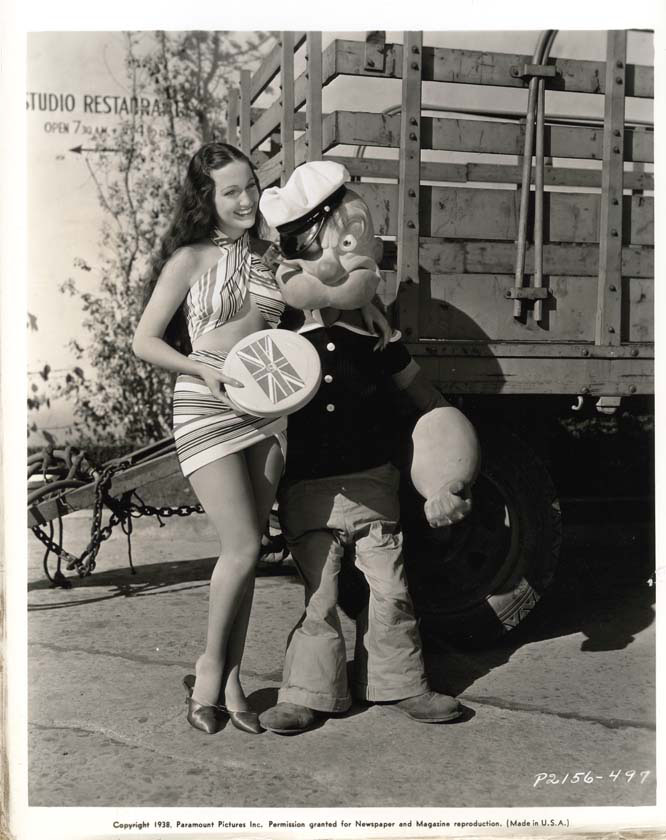
"Popeye: "I Yam What I Yam" ' by E.C. Segar (the first volume in Fantagraphics reprint of the original comic strips..)
"Mere Anarchy" by Woody Allen
"Mingering Mike: The Amazing Career of an Imaginary Soul Superstar" by Dori Hadar
"Riot on Sunset Strip: Rock’n’roll’s last stand in Hollywood" by Domenic Priore
"Leni: The Life and Work of Leni Riefenstahl" by Steven Bach
"At the Same Time: Essays & Speeches" by Susan Sontag
"Harry Potter and the Deathly Hallows" by J.K. Rowling
"Things I’ve Said, But Probably Shouldn’t Have" by Bruce Dern with Christopher Fryer and Robert Crane
"The Uncommon Reader" by Alan Bennett
Also of note:
"Walt Disney: The Triumph of the American Imagination" by Neal Gabler
"I’ll Sleep When I’m Dead: The Dirty Life and Times of Warren Zevon" by Crystal Zevon
"Spook Country" by William Gibson
"Tearing Down the Wall of Sound: The Rise and Fall of Phil Spector" by Mick Brown
"The Book of David" by David Steinberg
"Diaries 1969 – 1979: The Python Years" by Michael Palin
"Born Standing Up: A Comic’s Life" by Steve Martin
... powers of ten

The lists keep coming. I admit that, being Extremely Old and Irrelevant, I don't keep track of new releases in music as much as I did back in the days when I was a Highly Desired Demographic with Flammable Money. But I was a bit perturbed last year at around this time to discover that all of the new recordings I had liked most in 2006 were by people who first stepped up to a microphone at least 30 and in some cases almost 60 years earlier. My favorite new recordings this year were not entirely as biased by old age, but I'm sure you'll still see a few signs of Creeping Historicism on the list.
In no particular order, with appropriate video links....:
Arcade Fire - "Neon Bible"
Bryan Ferry - "Dylanesque"
Jarvis Cocker - "Jarvis" (Bonus track here)
Amy Winehouse - "Back to Black"
Bruce Springsteen - "Magic"
Radiohead - "In Rainbows"
Bob Dylan "Modern Times"
Neil Young "Live at Massey Hall 1971"
And my favorite song of the year:
Coming up next: books of the year...
Counting to 10
 I was recently asked by a local web publication to contribute a top ten list of my favorite films of the year and while I am always reluctant about these things, I complied. I was given specific instructions that it had to contain exactly ten items, no more, no less, and that they all had to be 2007 releases. I've bent the rule here to add two more titles, one of which I hadn't seen at the time I made the list. Here it is, with a few annotations.
 Best of 2007
(roughly in order of preference, though once you get past the first 3 or 4, it gets blurry)
1. I'm Not There (Todd Haynes)
2. Across the Universe (Julie Taymor)
3. No Country for Old Men (Joel and Ethan Coen)
4. Sicko (Michael Moore)
Everything else, in no logical order:
3:10 to Yuma (James Mangold)
The Golden Compass (Chris Weitz)
Romance and Cigarettes (John Turturro)
Hairspray (Adam Shankman)
Once (John Carney)
Zodiac (David Fincher)
The Hot Fuzz (Edgar Wright)
The Landlord (Adam McKay)
Not a very good year in all, but far above the norm for musicals and westerns - and in the case of No. 1, both.
After much thought, I finally decided that I couldn't quite justify adding "Redacted" or "Helvetica" to the list. The former stays off because it's ultimately muddled, the latter because I suspect my fondness for it has more to do with my own font obsession that with the film itself.
Still haven't seen at least a few films that I'm told have a shot at a top ten list ("Sweeney Todd", "The Assassination of Jesse James", "Persepolis", the Joe Strummer documentary), but you have to draw the line somewhere...
Best DVD release: "Popeye the Sailor Volume One: 1933 - 1938" (Warner Home Video)
(I'll add a list of music and books later....)
Thursday, December 27, 2007
In a Safe Place

The 2007 National Film Registry list has been announced by the Library of Congress:
• Back to the Future (1985)
• Bullitt (1968)
• Close Encounters of the Third Kind (1977)
• Dance, Girl, Dance (1940)
• Dances With Wolves (1990)
• Days of Heaven (1978)
• Glimpse of the Garden (1957)
• Grand Hotel (1932)
• The House I Live In (1945)
• In a Lonely Place (1950)
• The Man Who Shot Liberty Valance (1962)
• Mighty Like a Moose (1926)
• The Naked City (1948)
• Now, Voyager (1942)
• Oklahoma! (1955)
• Our Day (1938)
• Peege (1972)
• The Sex Life of the Polyp (1928)
• The Strong Man (1926)
• Three Little Pigs (1933)
• Tol’able David (1921)
• Tom, Tom the Piper’s Son (1969-71)
• 12 Angry Men (1957)
• The Women (1939)
• Wuthering Heights (1939)
You can find the complete press release here, and a list of all of their previous selections since 1989 here.
Saturday, December 15, 2007
This is my happening...
...and it freaks me out.
For no particular reason, I found myself thinking of "Beyond the Valley of the Dolls" this morning. "BVD", as it's affectionately known to its fans, is one of those movies that hooks me every time, and now - in light of the more recent events in the life of Phil Spector - even seems creepily prescient. Roger Ebert may have a lot to answer for (I date the decline if film discussion and the rise of the blockbuster/Box-Office mentality from the day he and Gene Siskel turned criticism into the modern equivalent of the Roman coliseum, but that's another subject for another day) but he'll always have a special place in movie history for this melo-comedic gem. I've never met him - well, that's not exactly true, since I shared an elevator with him at the Rihga Royal in New York once. I regret not having thanked him for scenes like this:
For no particular reason, I found myself thinking of "Beyond the Valley of the Dolls" this morning. "BVD", as it's affectionately known to its fans, is one of those movies that hooks me every time, and now - in light of the more recent events in the life of Phil Spector - even seems creepily prescient. Roger Ebert may have a lot to answer for (I date the decline if film discussion and the rise of the blockbuster/Box-Office mentality from the day he and Gene Siskel turned criticism into the modern equivalent of the Roman coliseum, but that's another subject for another day) but he'll always have a special place in movie history for this melo-comedic gem. I've never met him - well, that's not exactly true, since I shared an elevator with him at the Rihga Royal in New York once. I regret not having thanked him for scenes like this:
Thursday, December 13, 2007
The Birth of the Cool
...made in Japan? James Bowman, writing in The American, suggests that the kind of cool detachment we associate with Philip Marlowe or Sam Spade found its strongest cinematic depiction in the post-war films of Akira Kurosawa.
Saturday, December 08, 2007
Theology, authority and bears

There have been a lot of articles about Philip Pullman in the last few weeks, due - obviously - to the release of The Golden Compass. And of course the rather silly objections calling on a boycott of the film because it might actually encourage children to read the books. This interview from "moreintelligentlife" is one of the best I've seen in a while.
My own feelings about the film are that despite the obvious elisions and compression in turning a complex book into a movie - and a movie intended to become a money-earning franchise, no less - , it's a visually stunning and exciting companion-piece to Pullman's extraordinary books, and if it does well enough to a) introduce new readers to His Dark Materials and b)get the next two films made I'll be very happy indeed.
You can watch the first five minutes and other clips from the film here.
Tuesday, December 04, 2007
Birdie Num Num
Thanks to Scopitones.com and Bedazzled for digging up this early short film directed by Robert Altman somewhere around 1964 or '65. Released as a Scopitone for the Herb Albert track "Bittersweet Samba", it's also known as The Party, and has quite a few points in common with the great Blake Edwards film of the same name.
A slightly better quality copy can be found here.
A slightly better quality copy can be found here.
Sunday, December 02, 2007
The Color of Money
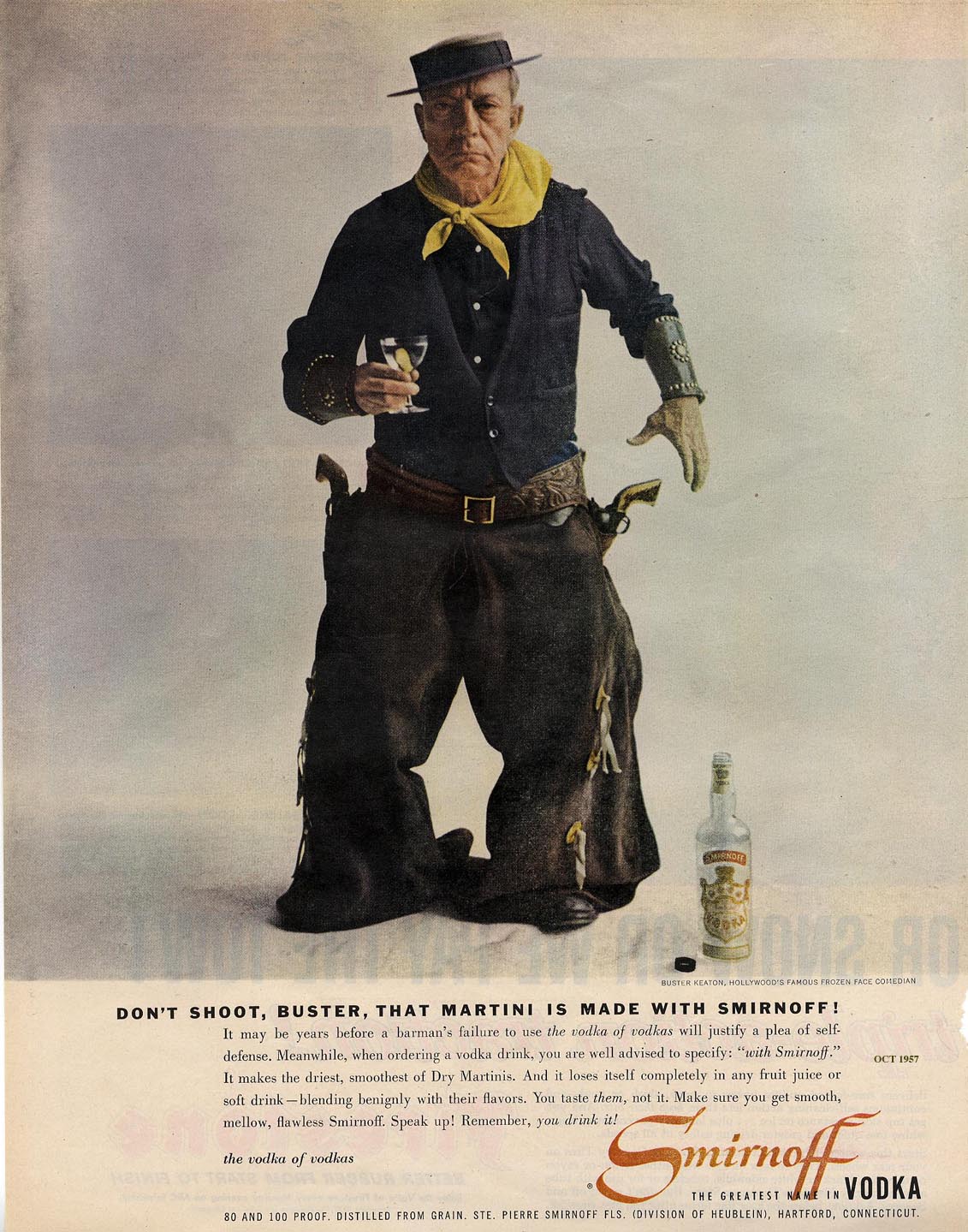
Whether you call it a 10 minute commercial in the form of a tribute to Hitchcock, or a 10 minute tribute to Hitchcock in the form of a commercial for a Spanish wine company, this new short film by Martin Scorsese is a lightweight but amusing parody, not only of Hitchcock but of Scorsese himself. It's amusing if insubstantial, but redeemed by the final shot.
And while we're on the subject of world-class filmmakers selling upscale wares,here's
Wong Kar-Wai launching a new perfume from Dior (with Eva Green as Cinderella), a competing scent from Lancome (with Clive Owen) and a High Definition TV for Phillips, all released earlier this year. The Phillips spot is easily the best, a garishly colored Science-fiction/detective mini-epic with a nod to Godard's "Alphaville".
(Warning: The Dior and Phillips sites are both very slow-loading and pop-up heavy, so be prepared to wait a while...)
Busy guy, that WKW. In addition to the above and My Blueberry Nights (which is his first English language feature, now scheduled to hit US screens next February) he also directed Brad Pitt in an ad for a Japanese cell phone company - but it seems to have been eradicated from the internet completely!
Meanwhile, here's a PSA that I don't recall ever seeing before..
And as long as we're diving into the Youtube advertising pool, here's a blast from the past, Baz Luhrmann's Chanel ad with Nicole Kidman, from a few years back. Hard to believe that this is the only thing he's made since Moulin Rouge.
Saturday, November 10, 2007

Saturday, November 03, 2007
Words are pouring out like endless rain into a paper cup

The following was written not as a formal review but as a letter to a friend discussing Julie Taymor's Across the Universe. Rather than try to prod it into a more formal piece of criticism, I'm putting it up here as is...
"I don't know that I've seen anything this year that I've liked nearly as much as "Across the universe", but, as I mentioned earlier, I was originally skeptical. First of all, the trailer raised comparisons with Milos Forman's misguided 1979 version of "Hair", a movie that was either 10 years too late or 25 years too early. (There are a few similarities in the storylines - and it's not unrealistic to think that Taymor is probably familiar with a production or too)..
Secondly, when you think of some of the awful liberties that have been taken with the Beatles catalogue over the years, by literalists who think that they have to make a live-action version of "Yellow Submarine" (as in the Bee Gees "Sgt. pepper" and a very shortlived mid-70s Broadway disaster of the same name) or, even worse, reduce the songs to cliched background jingles for lots of kids in bad wigs and exaggerated fringe-y hippie clothes flashing peace signs and carrying on like a group of street mimes on laughing gas (see Milos Forman's "Hair"....)
I should add that there was also a 3rd thing that made be a little doubtful; I heard parts of the soundtrack and was put off by the working-class accents ("Close yer eyes and I'll kiss yer, tomorrow I'll miss yer"), the desperate, plaintive opening of "I Want to Hold Your Hand", the chamber-like arrangements - all things which turned out to work much more effectively in the film than I would ever have guessed.
With those serious doubts (slightly lessened by having watched "Frida" a few week ago . I still haven't seen "Titus", but it's been on my order list with the library for months...) I have to admit that I was won over by the film almost instantly, from the introduction of parallel narrative lines during "It Won't be long now". By the time of "All My Loving" and "I Want to Hold Your Hand" came around, it was clear that the film wasn't just a nostalgic trip through the Beatles repertoire and that the songs were going to be placed with the context of the characters, accents, plaintiveness and all.
Which is one of the first really original things about Taymor's approach. While the film is obviously very stunning visually, it's NOT just a string a music videos or, even more importantly, a series of isolated episodes designed to illustrate the songs (see again the Bee Gees movie, "All This And World War Two" etc...). . You have to buy into the characters' lives first - their accents, high school crushes, family issues, etc... . The songs - and this is especially tricky, given their familiarity and frequent ventures into surrealism - have to make the movies emotional points work too or else they'll stop the story dead still...
Which is not to say that the film isn't also about the Beatles or ignores the fact that just about every song in it has its own substantial legacy - artistically, culturally, historically. But one of the most brilliant things that Taymor does is to consider all of those factors as a kind of collective unconscious, a shared backstory that the audience has with the characters. I cringed at first when I realized that the characters all had names derived from Beatles' songs (Max, Lucy, Prudence, Sadie, etc..) thinking that this would be another example of the dead literal-mindedness of the BeeGees film (Of course, "Yellow Submarine" does a little of the same thing with puns, etc...but gets away with it ), but because Taymor understands or assumes our familiarity, she doesn't have to be so bone-crushingly obvious. In fact, she doesn't even actually have to include "Sexy Sadie" or "Maxwell's Silver Hammer" or "She Came In through the Bathroom Window" for the audience to register those songs.
Let me digress for a minute: Several years ago there was an absolutely awful movie based on "The Mod Squad", arguably one of the worst movies of the last 10 or 15 years. At the end of the film, when the heroes are sitting around without much to do, one of the cops walks up to them and says "What do you guys think you are, some kind of "Mod Squad"?" It's a weird cultural reference point, because the cop and the audience know what the characters themselves don't; In a sense, they're the only people in the universe that have never heard of "The Mod Squad".
You might think that "Across the Universe" might have that same kind of problem. how do you put your characters into some kind of archetypal "1960s" world in which they've never heard of the Beatles or those songs? But you don't get that sense of absence in the film. Rather, it's a kind of alternate 1960s in which the recognizable songs become a kind of ethereal vapor running through their lives and through the universe itself. It doesn't matter that we have "Let It Be" being song in 1964 or 65, 5 years before it was written. The film operates in a realm where memory reconstructs history.
Which brings me to a final clever thing that the film does really well. Yes, it's about the "1960s" with all the pertaining cultural baggage that entails. But it references the key points of the period - civil rights, Vietnam, the Columbia uprising, the Weathermen,etc. - in a very clever way that avoids banality and nostalgia or the kind of superficiality that many accuse "Forest Gump" of using in its approach to history. Taymor does a very shrewd thing in relying on the viewers interest/boredom/awareness/ in that era by making it alive yet almost secondary to the characters and their lives. Thus, we have these familiar events but played on a different scale. A Hendrix figure who is obviously not Hendrix, referencing the idea of Hendrix without resorting to a banal roman-a-clef approach. The Bono figure, who is Tim Leary and Ken Kesey and yet not really either of them. The famous "Let It Be" rooftop concert, used in a completely new context, yet not really having to carry any of the historical weight of the actual event... (No band breaking apart, no Yoko), This too is a refreshing approach to the history, a sense not of name-checking the events and names of the period but of trying to address the emotional issue of what it was like to live through such things.
Funny that you should mention favoring the "Come Together" and "I Want You" sequences, arguably the most surreal in the film. I think my reaction was a little different. And despite the appearances of Joe Cocker, Eddie Izzard and Bono, I don't think the film gives the sense of dropping-in-famous-guest-stars-to-keep-the-audience-busy (a la "Tommy" or "Sgt. Pepper"). I think I was more drawn in by the principals and their stories, the way their lives were never shoved aside by the spectacle or the music. That's why in the middle of all of the more fantastic elements it's still a nice surprise when Prudence reappears, Sadie resolves her problems or Lucy turns up across the rooftop at the end. The movie gets to the heart of how music (and especially this music) and emotion and intense cultural events change the way people think and behave.
Yes, I'm rambling on pretentiously, but this film grabbed me straight in the heart in a big way, not just once but probably with about every other song. I react emotionally to musicals (and children's movies) but this was more than the usual response, which can probably be defined as how-can-anything-be-so-perfect? (as Gene Kelly and Debbie Reynolds getting together or Pinocchio coming back to life)? There's that too, of course, but I think that what "Across the Universe" touches is that magical and elusive sense of possibility that is so well defined by the Beatles' music and their cultural significance. yes, it's easy to dismiss "All You Need Is Love" as a corny statement, but when you hear those odd harmonies and irregular time signatures and daft counterpoints, it's just as easy to wish that it was some sort of organized movement because , damned if you're not ready to sign up. "Nothing's gonna change my world"? Hardly.
Okay. I'm all pontificated out."
Saturday, September 29, 2007
Sunday, September 23, 2007
Crazy world

If it's true, this may be the singularly most unusual "old Hollywood" story I've ever heard. But I'll just direct you to the source. For the last few weeks, a gossip blogger who uses the name "Ent Lawyer" (is that some kind of Tolkien thing?) has been drawing attention with his story that an award-winning actress was actually a man. Here's the original blind item as it appeared on his blog "Crazy Days, Crazy Nights" three weeks ago, and here's the wrap-up where he tells the whole story.
I suppose you know this means war...
The first of these has been around for over a year, and the sequel's been up since March, but I just ran across them. Some of the best Flash animation I've seen, and a sort of contemporary "Duck Amuck". The artist's name is Alan Becker (according to his web page, he's only 18) and you can find more of his work here.
Animator vs. Animation by *alanbecker on deviantART
and the sequel:
Animator vs. Animation II by *alanbecker on deviantART
Animator vs. Animation by *alanbecker on deviantART
and the sequel:
Animator vs. Animation II by *alanbecker on deviantART
Saturday, August 11, 2007
Bonnie and Clyde and Ingmar and Harry
It wouldn't be much of a weekend without an arts overload from the New York Times, would it?
A.O. Scott looks at the 40th anniversary of Bonnie and Clyde and feels guilty...
Woody Allen recalls Ingmar Bergman,
Martin Scorsese weighs in on Michelangelo Antonioni,
and Christopher Hitchens holds forth on the latest and last Harry Potter book.
A.O. Scott looks at the 40th anniversary of Bonnie and Clyde and feels guilty...
Woody Allen recalls Ingmar Bergman,
Martin Scorsese weighs in on Michelangelo Antonioni,
and Christopher Hitchens holds forth on the latest and last Harry Potter book.
Friday, August 03, 2007


Tuesday, July 31, 2007
Michelangelo Antonioni, 1912 - 2007

..And just on the heels of yesterday's news comes another obituary. It's the end of an era for the giants who reshaped international cinema in the postwar years.
Details and appreciation here, plus a guide to scenes from his films on YouTube.
Monday, July 30, 2007
Ingmar Bergman, 1918-2007

One of the true giants of international cinema has passed away. There's much to read and remember from the New York Times and the Guardian.
Wednesday, July 25, 2007
...having a cow
Ignore the usual sour-grapes that are bound to follow anything that has been around as long as it has. The Simpsons isn't just a long running tv series; it's mankind's greatest achievement! Says so right in The Onion's A.V. World, where they're commemorating the release of The Simpsons Movie with an entire week of Springfield-related content. For starters, try this list of "15 Simpsons Moments that Perfectly Captured their Eras" . I couldn't agree more with No. 6, which sums up the post-ironic age perfectly when Homer goes on the road with Lollapalooza (his act consists of being hit in the stomach by a cannonball), prompting this audience exchange:
"Oh, here comes that cannonball guy. He's cool."
"Are you being sarcastic, dude?"
(after a desparate pause...)
"I don't even know any more."
Below, one of the great Simpsons guest star appearances:
"Oh, here comes that cannonball guy. He's cool."
"Are you being sarcastic, dude?"
(after a desparate pause...)
"I don't even know any more."
Below, one of the great Simpsons guest star appearances:
Monday, July 23, 2007
First things
"First things are always beautiful", as the critic and novelist Gilbert Adair accurately said of this film. More than eleven decades have passed since the Lumiere brothers first presented this work to the public, but it's lost none of its magic. Look! it says. Here is the real world of people and animals and bicycles and traffic. It's alive, it's real and above all, it moves!
Sunday, July 22, 2007
New Royalty: the Purple Edition

The Artist Still Known as Prince has been very busy lately, launching a new fragrance (scratch here for a sample), opening a club in Las Vegas,playing lengthy sold-out engagements in Los Angeles and London (What? He's only playing in cities that start with "L"?), preparing for a religious sabbatical sometime next year, and - this week - releasing a pretty darn good new album, "Planet Earth", which marks the return of former Revolution-mates Wendy and Lisa. In the New York Times, Jon Pareles explains that Prince could pretty much rule the world if he wanted to, while Time and the Guardian explain why he's giving the record industry fits. Though it seems to me that the clip below might be a pretty good reminder as well.
Saturday, July 21, 2007
A lot of nerve

Besides his own excellent work as a solo artist and with Roxy Music, Bryan Ferry has always been one of the most gifted interpreters of other songwriters' work, his smooth and subdued lounge-lizard vocals bringing an air of world-weary melancholy to everything from The Velvet Underground to "You Are My Sunshine". From the blistering version of "A Hard Rain's A Gonna Fall" that opened his first solo album, 1973's "These Foolish Things" to the pairing of "It's All Over Now Baby Blue" and "Don't Think Twice It's All Right" on 2002's "Frantic", Ferry has revealed a surprising affinity for the work of Bob Dylan, culminating in what seems in retrospect like an inevitable event, his latest album "Dylanesque". Browsing through the Dylan catalog, Ferry explores everything from light-hearted pop to Hendrix-inspired noise to make even such familiar and inimitable songs as "Simple Twist of Fate" and "Just Like Tom Thumb's Blues" into a personal cabaret. The highlight is this poignant, haunting resetting of one of Dylan's most bitingly angry songs, "Positively 4th Street".
Friday, July 20, 2007
...radio on

It's punk-nostalgia time for the Guardian's Film and Music Weekly. The highlights: Alex Cox offers a punk-movie manifesto and Laura Barton traces the route of one of the greatest pop songs ever. Also feature: the original rude boy, Derek Jarman's Jubilee and Christmas with the Sex Pistols.
Monday, July 16, 2007
Just like a woman...

Finally, some footage from one of the most anticipated films of the year, I'm Not There, in which director Todd Haynes (Velvet Goldmine, Far From Heaven) sets his sights on Bob Dylan, with The Man From Hibbing played by six different actors of varying race and gender, Heath Ledger and Richard Gere among them. The clip below features Cate Blanchett as the Don't Look Back-era Dylan, with David Cross as Allen Ginsberg.
(A big thanks to Hollywood Elsewhere and The L.A. Times' Gold Derby for the link, though I have to take exception to the latter's complaint that Blanchett isn't "believable". Whatever Haynes' is up to here, it should be pretty obvious that it's not realism.)
Sunday, July 15, 2007
Have you seen me?
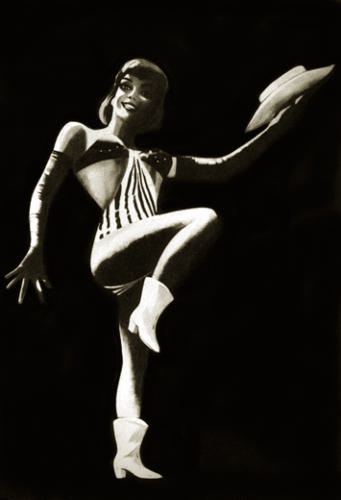
You may recognize the lovely lady to the right from the cover of Gore Vidal's classic "Myra Breckenridge", but before securing that modeling gig she was a fixture of the Sunset Strip, perched on a giant coin as part of a billboard advertising the Sahara Casino and located in front of the legendary/notorious Chateau Marmont.
 Raquel Welch duplicated the cowgirl's costume in the excruciating 1970 film version of Vidal's novel (which also included footage of the original statue).
But an even odder appropriation of the cowgirl statue has been brought to my attention, courtesy of Domenic Priore's "Riot on Sunset Strip" (reviewed below).
 In 1961, cartoonist Jay Ward unveiled a statue of Rocky and Bullwinkle in front of his Sunset Blvd. studio, directly across the street from the Chateau Marmont. (The studio is gone, as is Ward's neighboring gift shop, The Dudley Do-Right Emporium, which operated from 1971 to 2005, but the statue remains a Hollwood fixture to this day.) And as both Priore's book and this picture clearly show, Ward's statue was a mischievous (but subtle) parody/homage to his lovely, patriotic neighbor.
Speaking of Hollywood landmarks, a friend directed my attention to Hollywood Lost and Found, a modest but entertaining selection of Southern California history, movie lore and other miscellany, including this rather disturbing image (Warning!: Contains Clowns!)
Is it really possible that both of these satirical classics are out of print?
Finally, here's an apocalyptic theme song for the day:
Saturday, July 14, 2007
"To smoke and have coffee...and if you do it together, it's fantastic!"

The almost indescribable Wings of Desire ("Der Himmel uber Berlin") is 20 years old this month. On his website, director Wim Wenders is justifiably proud of his much-loved creation. If you haven't seen it (or if you've had the misfortune of seeing the American remake), ..what are you waiting for?
Friday, July 13, 2007
Heard you missed him, now he's back...

I was fortunate enough to see Sly and the Family Stone perform live in 1973, right on the heels of their last great album Fresh and they were amazing. Sly's rapid decline and gradual withdrawal from the music world has made him the last of the legendary recluses in music but, as this interview in the current Vanity Fair reveals, the musician's long absence from the public eye may be coming to an end. Hot fun in any season.
Bookmobile
Thanks to an item at Trio for introducing me to Literary Traveler (even though it's been around since 1998!), a website about books and authors and the places they lived and wrote about. Each month is devoted to a particular theme, currently "Western Literature" (as in cowboys and covered wagons). Recent subjects have included children's books and pirates, and the individual articles on the site run the gamut from the Victorian England of Beatrix Potter to the Puerto Rico of Hunter S. Thompson's "Rum Diary".
Thursday, July 12, 2007
There's a Riot Going On
The Riot on Sunset Strip (the historical event) was a spontaneous protest that erupted one night in November 1966 when Los Angeles police, prompted by local business interests, tried to enforce a curfew law in order to drive out the teenaged crowds who had dominated the area’s club scene for the previous few years.
Riot on Sunset Strip (the movie) was a quickly-produced exploitation film with production values slightly lower than an episode of “Dragnet” but with performances by some of the authentic Sunset Strip bands of the period (The Standells and The Chocolate Watchband among them). Cult starlet Mimsy Farmer falls in with a bad crowd, to the dismay of her estranged father, policeman Aldo Ray.
“Riot on Sunset Strip: Rock ‘n’ Roll’s Last Stand in Hollywood” (Jawbone Press, 288 pp., $29.95) is probably the definitive look at the period that lead up to the above two items, but for author Domenic Priore the real riot of the period was a cultural breakthrough that produced an onslaught of significant music in those strange few years before AM top 40 gave way to unprogrammed FM.
Priore's premise is that after the immediate shock of the British invasion Los Angeles responded in kind by becoming the musical and cultural capital of all things young and new. Besides obvious heavyweight acts like The Byrds, Frank Zappa, Love and the Doors, it was an environment in which all kinds of music from surf to psychedelia, from the feel-good pop sounds of the Turtles and The Mamas and the Papas to proto-punk garage bands like The Seeds and The Knickerbockers flourished and encouraged each other.
Priore is a pop culture historian and enthusiast with an encyclopedic grasp of the period as well as, I'd guess, an extensive record collection and a complete run of "Hit Parader" back issues. He can tell you not only how many different bands recorded "Hey Joe" but how many recorded "She Sang Hymns Out of Tune". Hardly an aspect of pop culture of the era, from art to appearances on. Hanna Barbera cartoons escapes his attention. The result is an exhaustive, handsomely designed volume that not only recreates the spirit of that brief period in L.A. history but will have you scribbling lists of obscure tracks and forgotten bands worth tracking down. His grasp of the period is strong enough to defend even the most commercial projects of the time (Hey, Hey, they're the Monkees) and as well as to define the Sunset Strip period within history and distinguish it from the later excesses of the San Francisco sound and the rise of FM-radio Album-oriented rock. His is a lively, informative and always entertaining history of a microcosmic teenage culture that burned brightly and disappeared too fast.
Riot on Sunset Strip (the movie) was a quickly-produced exploitation film with production values slightly lower than an episode of “Dragnet” but with performances by some of the authentic Sunset Strip bands of the period (The Standells and The Chocolate Watchband among them). Cult starlet Mimsy Farmer falls in with a bad crowd, to the dismay of her estranged father, policeman Aldo Ray.
“Riot on Sunset Strip: Rock ‘n’ Roll’s Last Stand in Hollywood” (Jawbone Press, 288 pp., $29.95) is probably the definitive look at the period that lead up to the above two items, but for author Domenic Priore the real riot of the period was a cultural breakthrough that produced an onslaught of significant music in those strange few years before AM top 40 gave way to unprogrammed FM.
Priore's premise is that after the immediate shock of the British invasion Los Angeles responded in kind by becoming the musical and cultural capital of all things young and new. Besides obvious heavyweight acts like The Byrds, Frank Zappa, Love and the Doors, it was an environment in which all kinds of music from surf to psychedelia, from the feel-good pop sounds of the Turtles and The Mamas and the Papas to proto-punk garage bands like The Seeds and The Knickerbockers flourished and encouraged each other.
Priore is a pop culture historian and enthusiast with an encyclopedic grasp of the period as well as, I'd guess, an extensive record collection and a complete run of "Hit Parader" back issues. He can tell you not only how many different bands recorded "Hey Joe" but how many recorded "She Sang Hymns Out of Tune". Hardly an aspect of pop culture of the era, from art to appearances on. Hanna Barbera cartoons escapes his attention. The result is an exhaustive, handsomely designed volume that not only recreates the spirit of that brief period in L.A. history but will have you scribbling lists of obscure tracks and forgotten bands worth tracking down. His grasp of the period is strong enough to defend even the most commercial projects of the time (Hey, Hey, they're the Monkees) and as well as to define the Sunset Strip period within history and distinguish it from the later excesses of the San Francisco sound and the rise of FM-radio Album-oriented rock. His is a lively, informative and always entertaining history of a microcosmic teenage culture that burned brightly and disappeared too fast.
a love letter straight from the heart..

Dennis Hopper is older and wiser and, reassuringly, still just a little bit crazy.
And speaking of obsessions, it's easy to get hooked on this guide to The Number One Hits of the last 115 years...
What was number one when I was born? Don't ask...
We all shine on...
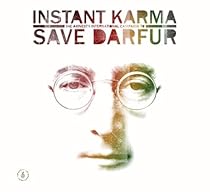
It's pretty simple: Amnesty International - an organization which already deserves your support - wants to draw attention to the horrors currently taking place in Darfur, Sudan. They've released an album of a few dozen musical heavyweights (U2, Green Day, R.E.M., Aerosmith, Jackson Browne, Lenny Kravitz) performing cover versions of John Lennon songs. Like most such projects, it's all over the map musically , but most of it is pretty good. All you have to do is go here and sign their petition and/or buy the CD.
More than a Contender

For at least three decades, he was the standard by which other actors were judged. In the London Review of Books, Michael Wood looks at the legacy of Marlon Brando.
Tuesday, July 10, 2007
Excitable Boy

Though he wrote sensitive and intelligent songs that earned the admiration of such heavyweights as Bob Dylan and Bruce Springsteen, Warren Zevon’s reputation as a hard-drinking wild man couldn’t help but leak through into his work. To most listeners, he was the monster howling at the moon in his only real hit record “Werewolves of London”, the psychotic necrophile of “Excitable Boy”, the sexual adventurer of “Poor, Poor Pitiful Me”. Even songs that created fictional characters that are less likely to be autobiographical – like “The Envoy” (inspired by diplomat Philip Habib) or “Roland the Headless Thompson Gunner”, a collaboration with an ex-mercenary turned bartender in Spain - hinge on sudden violence and a sense of paranoia.
In the last year of his life, when his incurable cancer became public knowledge and his many friends and admirers in the music industry stepped in to help him produce his final album “The Wind”, the public saw a much softer Zevon, humbled but courageous as he tried to remain focused on his music in the face of deathI’m OK with it” he told a reporter. . “But it’ll be a drag if I don’t make it until the next James Bond movie comes out.” (Unfortunately, that turned out to be Die Another Day…)
The real story behind Zevon - the public troublemaker of the 70s, the mellowed realist of the end and everything in between – is far more complicated, as Crystal Zevon, his wife from 1974 through 1981, reveals in her vivid, messy and compulsively readable biography “I’ll Sleep When I’m Dead: The Dirty Life and Times of Warren Zevon”(Ecco Press, $26.95).
A child prodigy who studied scores with Stravinsky, Zevon escaped a broken home (He claimed that he and Sam Peckinpah were the only people who ever really made it out of Fresno) and entered the music business in a fairly conventional way, cutting a few records in the 60s, working as an in-house songwriter for White Whale Records (he wrote the B-side of the Turtles’ hit “Happy Together”) and gradually finding his own musical voice while working as bandleader for the Everly Brothers. As his own songs started to get noticed, he launched a solo career that won critical acclaim (he was named “Songwriter of the Year” by Rolling Stone in 1978) but never quite received the commercial success he deserved.
But at the same time that Zevon’s career was peaking, he was also giving in to alcoholism in the worst way. He was a mean drunk, eventually becoming violent and suffering from blackouts that prevented him from knowing just how far he had gone. His wife left him (and later faced her own drinking problem, as she reveals in the book), his record company lost interest and he more or less gave up on music and life, moving to Philadelphia (where he had an occasional girlfriend) and refusing to communicate with former friends and family.
Somewhere in the middle of the ‘80s, a new agent managed to revive Zevon’s interest in music, get him into rehab (it took more than one go, needless to say) and revive his career, although his audience would remain relatively small and loyal from that point on. But “I’ll Sleep When I’m Dead” isn’t the standard how-he-fought-his-demons-and-won story. Far from it. While sobriety probably kept Zevon from an early grave, he was hardly the typical AA success story. (Though he remained sober for 18 years, he became disillusioned with the traditional 12-step organizations, once telling someone that “I felt like my reward for getting sober was I didn’t have to see those people again”.) The drinking had stopped, but Zevon managed to replace it with other flaws and addictions, a running stream of female conquests and an emerging case of obsessive-compulsive disorder that had him wearing only grey clothing, making sure that the only money he carried was “lucky” and sending assistants out to buy cigarettes but making sure that the Surgeon General notice on the package didn’t mention “the C-word.”
But in spite of his compulsions, Zevon continued to write excellent songs and make records that some would call his finest. When he was finally diagnosed with untreatable cancer in 2002, it was almost painfully ironic, given the laughing-at-death persona that had shaped so many of his earlier songs. His response was typically complex, on one hand focusing on producing an exceptional album “The Wind”, which would serve as his final artistic testament, on the other, lapsing back into drinking after nearly two decades of sobriety. He lived long enough to see his first grandchildren born, died before “The Wind” received two Grammys (he had told Crystal that his death would earn a Grammy nomination). And so it goes.
Crystal Zevon’s book, drawn from interviews with friends and excerpts from Zevon’s own journals, is brutally honest, admirably nonjudgmental and, in the long run, remarkably evocative of just how difficult and brilliant Zevon was. Though ultimately limited by the boundaries of its Rashomon-like approach and plagued by a few minor editorial flaws (It’s Al Kooper, not Cooper!), it makes Zevon’s crazy genius come alive and sends you right back to his best work, the great songs that reflect and reveal his sad, troubled and ultimately excitable life.
Subscribe to:
Posts (Atom)